 Ken's Site
1. Beginning with a Small Act of Kindness
When people talk about Tzu Chi, many may think of volunteers dressed in blue-and-white uniforms, figures working at disaster sites, Tzu Chi hospitals, recycling efforts, or the familiar words, “Gratitude, Respect, and Love.”
However, Tzu Chi was not originally a large organization.
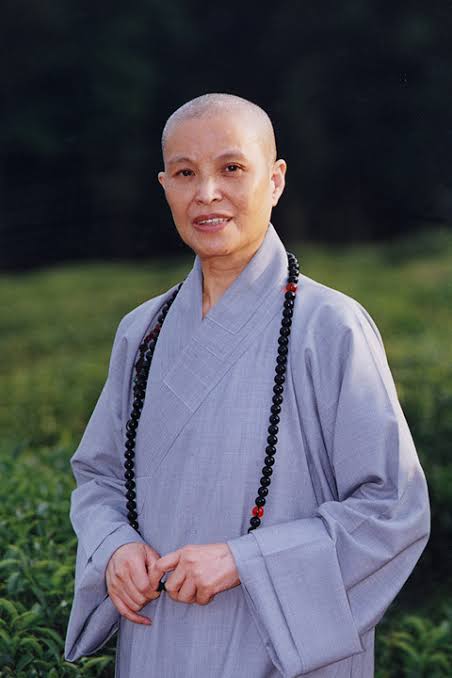
In 1966, Dharma Master Cheng Yen founded the “Buddhist Tzu Chi Merit Society” in Hualien. Resources were limited, and charitable work was not easy. Yet instead of waiting for the right conditions, she began with small things that could be done right beside her: six disciples made an extra pair of baby shoes each day, while thirty followers saved five cents a day and placed the money into bamboo banks.
This became what is now widely known as the “Bamboo Bank Era.”
Five cents may have seemed insignificant, yet it represented a willingness to leave a little love each day for a stranger.
Charity does not always begin with “I have plenty.” Sometimes, it begins with “I am willing to share a little.”
2. Compassion Is More Than an Emotion
The development of Tzu Chi was closely connected to the suffering that Dharma Master Cheng Yen witnessed among people in Hualien during the early years.
According to information from Tzu Chi and Taiwan’s National Memory Database, around 1966, Dharma Master Cheng Yen encountered patients who were unable to receive medical treatment because they could not afford the costs. These experiences further strengthened her determination to help save lives.
This also shaped one of the most important principles of Tzu Chi:
When we see suffering, we should not simply feel sorrow. We should find ways to lessen it.
As a result, Tzu Chi eventually developed beyond simple material relief and gradually established a comprehensive system of social service.
From charity to medical care, from education to humanities, and later extending to international disaster relief, environmental protection, bone marrow donation, and community volunteer services, Tzu Chi developed what it describes as its “Four Missions and Eight Dharma Footprints.”
3. From Charity to Healthcare — Protecting Human Life
Charity can temporarily ease difficulties in everyday life, but when a family falls into poverty because of long-term illness, what truly needs to be addressed is more than simply providing the next meal.
Tzu Chi gradually began investing in healthcare during the 1970s. In 1972, it established a free clinic in Hualien and later promoted the construction of a large-scale hospital. In 1986, Tzu Chi Hospital officially began operations.
The core of this journey is actually very simple:
People in need of medical care should not lose the opportunity to receive treatment simply because they are poor.
Healthcare therefore became one of Tzu Chi’s major missions, allowing the meaning of “charity” to extend beyond material assistance into the care and protection of human life.
4. Education — True Abundance Means Nurturing the Whole Person
Another important direction of Tzu Chi is education.
In Tzu Chi’s philosophy, education is not merely about accumulating knowledge. It also encompasses character, daily life, and learning about the meaning of life. Its educational philosophy emphasizes “gratitude, respect, and love,” incorporating life education, character education, environmental education, and other values into learning.
This reflects a more holistic view of education.
Being able to study and work is certainly important. But if a person lacks empathy, does not know how to respect others, or does not understand how to live in harmony with the environment, knowledge may become nothing more than a tool.
Therefore, the kind of education Tzu Chi hopes to promote is closer to this:
To help people develop both ability and warmth, both knowledge and conscience.
5. Environmental Protection — Extending Love from People to the Earth
Tzu Chi’s environmental initiatives are also familiar to many people.
From recycling and resource sorting to promoting plastic reduction, environmental education, and climate action, Tzu Chi has gradually extended the concept of “loving people” to “loving the Earth.”
In its sustainability strategy, Tzu Chi also identifies environmental, social, and governance issues as important areas, while addressing topics such as climate change, environmental disasters, disaster risk reduction, and disaster preparedness education.
Environmental protection may seem as simple as sorting a bottle or a sheet of paper for recycling. Yet behind these actions lies a way of life:
Do not assume that something is unimportant simply because it is small; and do not assume that you cannot change the world simply because you are only one person.
6. Tzu Chi’s Four Missions
| Mission | Core Spirit | Meaning |
|---|---|---|
| Charity | Relieving suffering and bringing happiness | Extending a helping hand when people need it most |
| Healthcare | Protecting life | Making medical care a source of hope |
| Education | Nurturing the whole person | Balancing knowledge, character, and life education |
| Humanistic Culture | Purifying the human spirit | Making kindness and love part of everyday culture |
Tzu Chi officially describes its four major missions as charity, healthcare, education, and humanistic culture. Through collaboration across different professional fields, these missions form a comprehensive system of service.
7. From Hualien to the World
One of the most distinctive features of Tzu Chi is that its work did not remain within Taiwan.
From its early efforts to help the poor in Hualien to its later involvement in international disaster relief, Tzu Chi’s volunteers gradually extended their reach to communities around the world. According to Tzu Chi’s information, as of 2025, its humanitarian footprint had reached 139 countries and regions.
When earthquakes, floods, typhoons, armed conflicts, or other major disasters occur, what people often see is not only relief supplies, but also groups of people willing to enter disaster areas and accompany those who are suffering.
This kind of humanitarian work across borders has transformed “Great Love” from an abstract slogan into something tangible.
It can be a hot meal, a tent, a free medical consultation, or a package of supplies. It can also simply be one person sitting beside another after a disaster and telling them:
“You are not alone.”
8. The Spirit of Tzu Chi in Modern Life
The compassion promoted by Tzu Chi does not necessarily have to be expressed through large-scale missions.
It can also return to the everyday lives of ordinary people.
| Tzu Chi Spirit | Practice in Everyday Life |
|---|---|
| Compassion | Show a little more empathy and offer a little less criticism |
| Gratitude | Cherish everything we have |
| Respect | Recognize and appreciate the differences between people |
| Sharing | Be willing to share our abilities with those who need help |
| Environmental Protection | Reduce waste and cherish the Earth |
| Volunteerism | Use our time and abilities to help others |
| Self-Reflection | While helping others, take time to reflect on and整理 our own inner world |
Tzu Chi’s official vision is “Purifying the Human Spirit, Creating a Harmonious Society, and a World Free from Disasters and Suffering,” guided by the important principles of “Great Compassion without Distinction and Great Mercy through Oneness.”
When these ideals are brought into everyday life, they ultimately come down to a series of seemingly small actions.
Conclusion|One Person’s Kindness Can Become a Light for Many
The journey of Tzu Chi began with a single bamboo bank.
The five cents saved in those early days was not much, and a pair of baby shoes was not expensive. Yet what was truly precious was the belief shared by those people—that even the smallest act of kindness can create strength when it is sustained over time.
Over six decades, Tzu Chi has grown from a small charitable organization in Hualien into an organization encompassing charity, healthcare, education, humanistic culture, international humanitarian assistance, and other fields.
However, if we wanted to understand Tzu Chi in a single sentence, perhaps we would not need to begin with its enormous numbers or organizational scale. 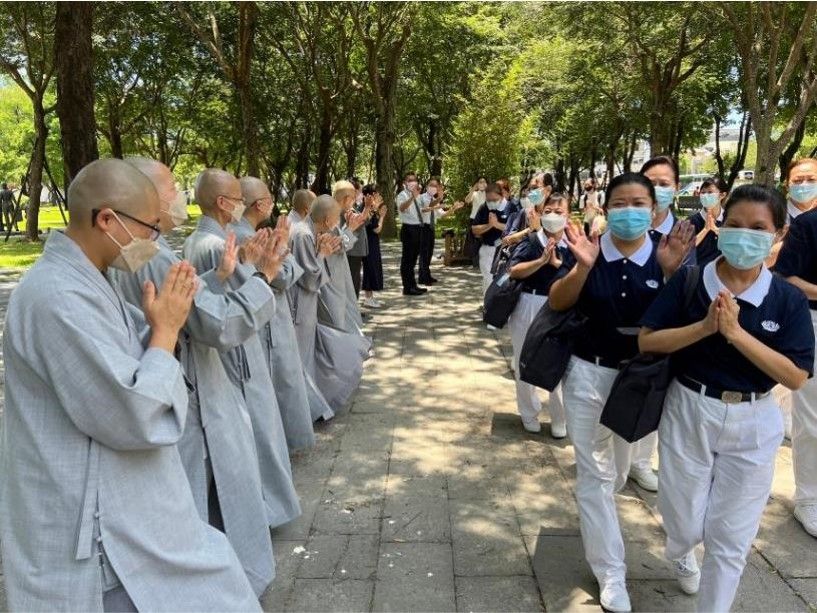
We can begin with one person.
Begin by choosing to care a little more about someone;
begin by wasting a little less;
begin by choosing not to simply walk away when we encounter suffering.
Because true compassion has never been something distant or impossibly grand.
It is simply the choice to reach out one more time when two people cross paths.
One person’s hand may seem small;
but when millions of hands are willing to reach out and hold one another,
that tiny glimmer of light may become a lamp bright enough to illuminate the world.