 Ken's Site
01|Who Was the Buddha? — The Story That Began with “Siddhartha”
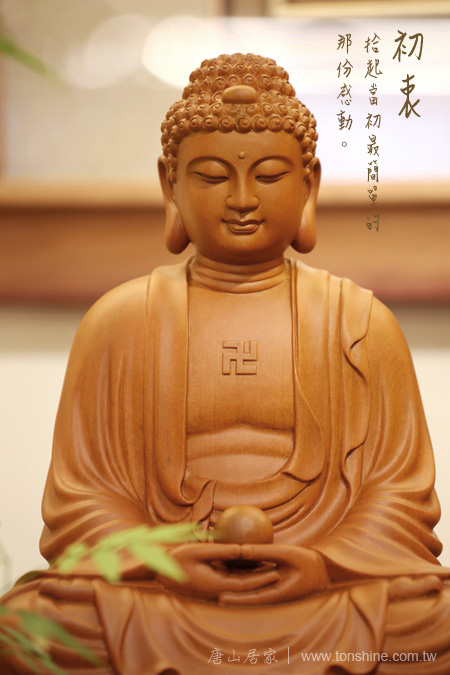
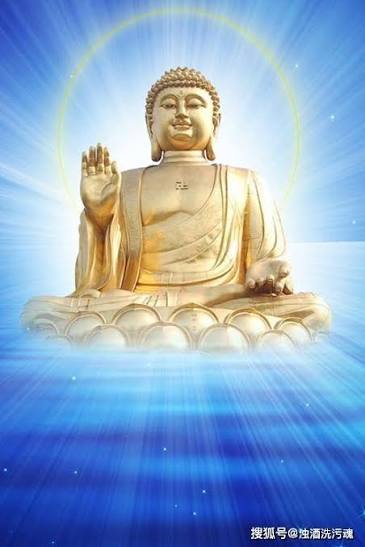
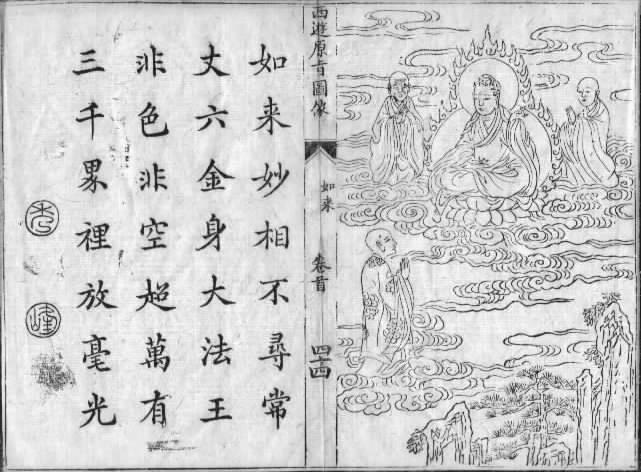
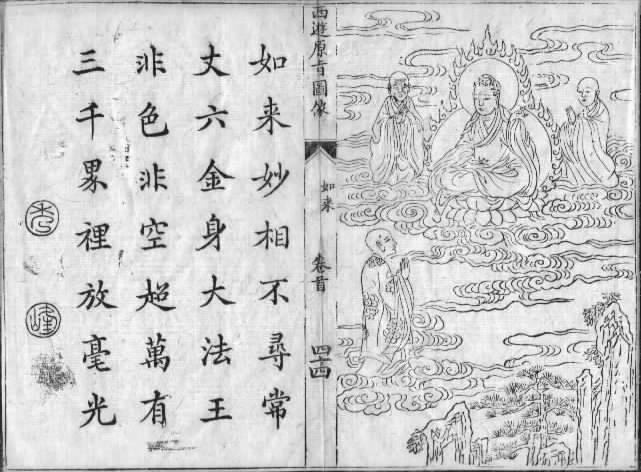
The term “the Buddha” generally refers to Shakyamuni Buddha, also known simply as the Buddha.
According to traditional Buddhist accounts, he was born in the Shakya clan in what is now the northern region of ancient India and was named Siddhartha Gautama. He was born into a royal family and grew up in relatively privileged surroundings.
Yet a life of comfort did not stop him from questioning the deeper meaning of existence.
According to tradition, when he ventured outside the palace, he encountered an elderly person, a sick person, a dead person, and a spiritual practitioner. These experiences led him to deeply recognize that:
No matter how noble or privileged a person may be, no one can ultimately escape aging, illness, death, and the many changes that accompany life.
He therefore began to contemplate a profound question:
“If suffering is unavoidable in life, is there truly a way to transcend suffering?”
This question became an important starting point on his journey of spiritual practice.
02|Leaving the Palace: Searching for the True Answer to Life
According to tradition, Siddhartha left his former life while still a young man and became a spiritual seeker.
This was not simply a journey from one place to another, but a profound turning point in his life.
He studied under different teachers and also undertook severe ascetic practices, hoping to discover a path to liberation through rigorous spiritual discipline.
However, after practicing for a long period of time, he gradually came to understand:
Excessive indulgence in pleasure cannot bring true freedom, while extreme self-denial and physical suffering do not necessarily lead to wisdom either.
He therefore chose a different path—what Buddhism would later call the Middle Way.
Neither indulgence nor extreme self-denial.
This idea would become one of the important principles within Buddhist thought.
03|Under the Bodhi Tree: From Siddhartha to the Buddha
After years of spiritual practice and contemplation, traditional accounts describe Siddhartha sitting in meditation beneath the Bodhi tree.
He resolved to look deeply into the nature of life itself.
Eventually, he was believed to have attained “enlightenment,” becoming the Buddha.
“Buddha” is not the name of a deity. Rather, it is a title associated with the meaning of “the awakened one” or “the enlightened one.”
In other words, the essential meaning of the Buddha is not “someone who possesses supernatural powers,” but rather one who has fully awakened to the truth of existence.
For this reason, the Buddha revered in Buddhism is also understood as an enlightened teacher who explored life through wisdom and shared the path he came to understand with others.
04|What Exactly Did the Buddha Realize?
The Buddha’s teachings are extensive, but several core ideas are particularly important.
| Core Teaching | Simple Understanding | Meaning in Life |
|---|---|---|
| 🌿 The Four Noble Truths | Understanding suffering, its causes, its cessation, and the path leading to its cessation | Finding a way to face and overcome suffering |
| 🛤️ The Noble Eightfold Path | A path of spiritual practice and everyday living | Gradually transforming one's thoughts, speech, and actions |
| 🍃 Impermanence | All conditioned phenomena are subject to change | Learning to accept the changes of life |
| 🔗 Dependent Origination | Things arise through the interdependence of numerous conditions | Understanding that nothing exists completely in isolation |
| 🪞 Non-Self | Not regarding a fixed and eternal self as an independent entity | Reducing attachment to the idea of a permanent self |
| 🪷 Compassion | Caring for sentient beings and seeking to reduce suffering | Treating ourselves and others with kindness |
Together, these teachings point toward one central idea:
Understand suffering, and through wisdom and practice, gradually move toward freedom.
05|The Buddha’s Teachings: Not Simply About the “Next Life”
When many people think of the Buddha, they may associate Buddhism with heaven, hell, reincarnation, and karma.
These are indeed important elements of Buddhist tradition, but the Buddha’s teachings also focus deeply on the life we are living in the present moment.
Why do we become angry?
Why do we still feel unsatisfied even when we already have so much?
Why can the loss of a relationship make it feel as though our entire world has collapsed?
Why do we always want things to happen according to our expectations?
These questions still exist today.
The direction offered by the Buddha is to observe the mind and understand how craving, anger, ignorance, and attachment influence our lives.
In this sense, Buddhism is not merely an ancient story. It can also be understood as a profound exploration of life and the workings of the human mind.
06|Compassion and Wisdom: Two Important Dimensions of the Buddha’s Teachings
The Buddha was not concerned only with achieving personal peace.
According to traditional accounts, after attaining enlightenment, he began traveling and teaching, sharing his understanding of the path with people from many different backgrounds.
Here we can see two particularly important dimensions of Buddhism:
Wisdom and compassion.
Wisdom allows us to see the nature of things more clearly.
Compassion inspires us to help reduce the suffering of others.
Wisdom without compassion can become cold and detached; compassion without wisdom may also fail to truly help others because the underlying problem has not been understood.
Therefore, the spirit represented by the Buddha can be understood as:
Seeing the world clearly, while treating the world with gentleness.
07|Why Does the Buddha Continue to Influence the World Today?
The Buddha lived thousands of years ago, yet his teachings continue to be studied and practiced by people around the world.
The reason may be quite simple:
Human lifestyles have changed, but the fundamental questions of the human heart have not completely changed.
People in ancient times struggled with aging, illness, and death, just as people do today.
People in ancient times experienced separation from those they loved, longing for what they could not have, loneliness, and regret. Modern people experience these things as well.
We may have changed our phones, cities, and ways of living, but we are still searching for happiness.
Therefore, what makes the Buddha’s story worth reading is not merely his sacred image, but the fact that he once faced the confusion of life much like an ordinary human being—and spent his life searching for answers.
🌸 The Buddha’s Life Journey
| Stage | Life Journey | Symbolic Meaning |
|---|---|---|
| 👑 Prince Siddhartha | Born into a royal family | Worldly life and material conditions |
| 🌅 Encountering the Realities of Life | Beginning to contemplate aging, illness, and death | The awakening of profound questions about life |
| 🧳 Leaving the Palace | Beginning a life of spiritual practice and seeking | Letting go of his former way of life |
| 🧘 Exploring Ascetic Practices | Experimenting with rigorous and extreme practices | Searching for a way to liberation |
| 🌿 Following the Middle Way | Neither indulgence nor self-torment | Discovering a new direction for spiritual practice |
| 🪷 Enlightenment Beneath the Bodhi Tree | Becoming the Buddha | The emergence of “the Enlightened One” |
| 📜 Teaching the Dharma | Sharing the path he had realized | The transmission of wisdom and compassion |
| 🌏 The Spread of Buddhism | Influencing later cultures and systems of thought | Becoming one of the world's major religious traditions |
🕊️ Lessons from the Buddha for Modern Life
If we bring the Buddha’s story into the context of modern life, we may find several simple yet profound reminders:
First, accept impermanence.
Life can never remain exactly as it is forever, which makes the people and moments before us all the more worthy of appreciation.
Second, observe your own mind.
Much of our suffering does not necessarily come entirely from the circumstances themselves; it may also arise from our expectations and attachments.
Third, learn to follow the Middle Way.
Life does not require us to constantly pursue extremes. Knowing how to practice moderation, balance, and rest is also a form of wisdom.
Fourth, preserve compassion.
In a world already filled with competition and conflict, someone who is willing to understand others can itself become a gentle source of strength.
🪷 Conclusion|The Buddha Left More Than a Faith—He Left a Path to Discover Ourselves
The Buddha’s life can be seen as a journey from “having” toward “understanding.”
He once possessed the privileges of royal life, yet discovered that material wealth could not answer the deepest questions of existence. He also experienced rigorous ascetic practices and eventually came to understand that extremity was not the only path to wisdom.
And so, beneath the Bodhi tree, he turned inward in search of answers.
Perhaps what makes the Buddha truly inspiring is not merely the sacred image that later generations created around him, but the fact that he seriously confronted a question that every human being must eventually face:
“How can a person truly attain freedom?”
More than two thousand years have passed, yet we are still searching for an answer.
Some people seek it through religion, some through philosophy, and others through reading, travel, and their own experiences of life.
 And one of the important reminders left by the Buddha is this:
True wisdom is not merely knowing what the world is like; it is also seeing how our own minds are responding to that world.
Life contains both gain and loss; there are encounters as well as separations.
We cannot stop impermanence, but we can learn how to face it.
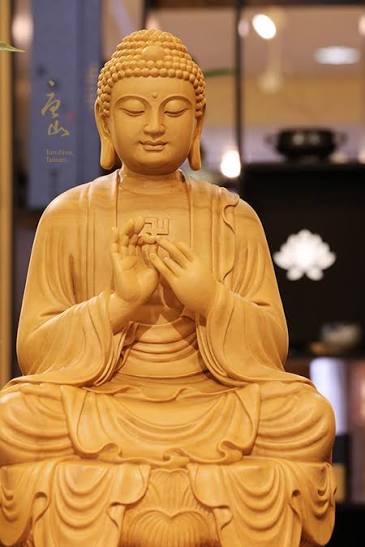
The Buddha is not merely a statue placed on a distant altar; “enlightenment” is not simply an ancient word from a story of the past.
It can also be that moment when a person is willing to pause amid the noise of life and truly see themselves.
When the mind is clear, wisdom can be found in what we see; when our thoughts are compassionate, warmth can be found in what we do.
Perhaps this is the quiet and enduring lamp that the Buddha left for humanity.