 Ken's Site
01|History Is the Memory Left Behind by Time
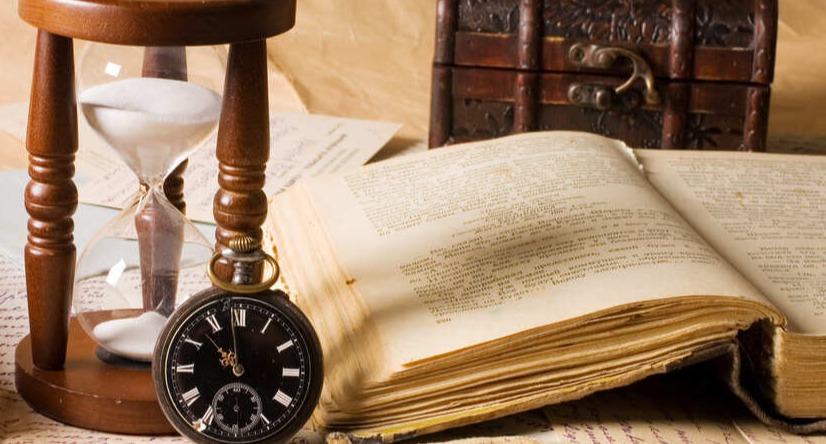
Every day, we are creating history.
The founding of a city, the birth of a nation, the end of a war, and even the ordinary life of an everyday person can all become important clues for understanding a particular era in the future.
“History” is not simply the process of arranging past events in chronological order. It is a way for humanity to understand the past.
Through written records, artifacts, architecture, archaeological sites, images, and oral memories, we piece together the world that once existed.
Therefore, history is not a cold timeline.
It is, in fact, a story written through the choices, dreams, fears, successes, and failures of countless people.
02|Civilization Is a Journey Humanity Has Built Step by Step
If we turn the clock back thousands of years, human life was completely different from what we know today.
There were no modern cities, no internet, and no high-speed transportation.
Human beings began with hunting and gathering, gradually developed agriculture, established villages and cities, formed political organizations, and created writing, laws, religions, and art.
Civilization did not appear overnight.
Rather, it was the result of generations of people building upon what came before them.
| Historical Period | Major Developments | Changes in Human Life |
|---|---|---|
| 🪨 Prehistoric Era | Tools, fire, hunting and gathering | Beginning to adapt to the natural environment |
| 🌾 Agricultural Societies | Farming, permanent settlements | Villages and social organizations gradually emerged |
| 🏛️ Ancient Civilizations | Cities, writing, laws | States and systems of civilization emerged |
| ⚔️ Medieval Period | Kingdoms, religion, trade | Social systems continued to develop |
| 🧭 Modern Era | Navigation, science, industry | Global exchange increased rapidly |
| 💻 Contemporary Era | Technology, information, globalization | The world became increasingly interconnected |
No era emerged out of nowhere.
Each one is connected to those that came before it, together forming the world we know today.
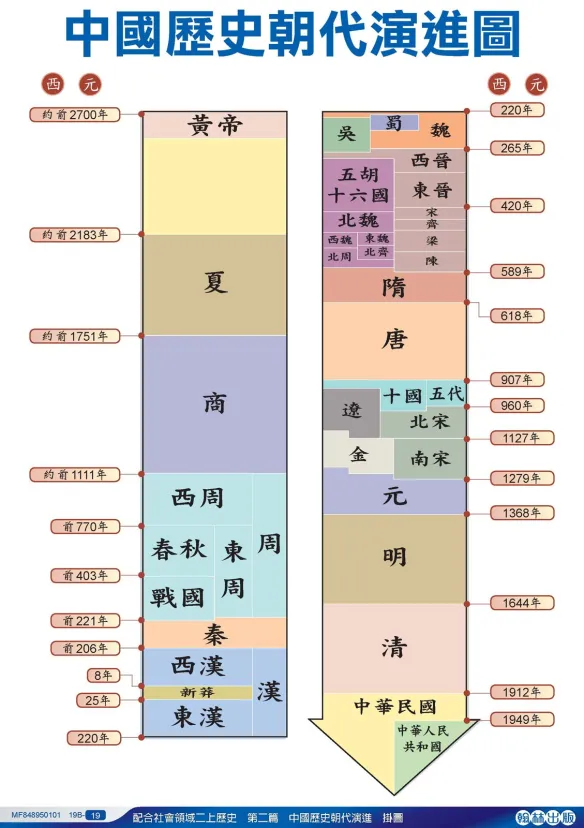
03|The Rise and Fall of Dynasties Is a Recurring Scene in History
When we turn the pages of history, we repeatedly encounter a familiar cycle:
Establishment, prosperity, transformation, decline, and the arrival of a new era.
A powerful empire may once have controlled vast territories, yet it may gradually decline because of internal conflicts, economic difficulties, wars, or external forces.
The prosperity of a dynasty is rarely created by a single hero. Behind it are usually many interconnected factors, including politics, economics, military affairs, culture, and society.
Therefore, when reading history, we should not ask only:
“Who was the hero?”
We should also ask:
“Why did people at that time make that decision?”
“What was life like for ordinary people?”
When we begin to understand history from different perspectives, the past is no longer simply a story of heroes and emperors. Instead, it becomes a much more complete portrait of human life.
04|War Is One of the Heaviest Chapters in History
History contains moments of glory, but it also carries scars.
Wars often reshape national borders, political systems, and social structures, while also affecting the lives of countless ordinary people.
A war in a textbook may appear as nothing more than a year, a battle, and an outcome.
But for the people who lived through that era, it might have meant:
losing their homes, being separated from loved ones, fleeing their homeland, or even losing their lives.
Therefore, studying the history of war should not be limited to examining who won and who lost.
More importantly, we should seek to understand:
Why did the war happen? What did it cause? And what did humanity learn from it?
One of the most valuable aspects of history is that it gives later generations the opportunity to see the mistakes of those who came before us and, perhaps, avoid repeating such tragedies.
05|History Is Not Only the Story of Great People
Historical writing in the past often centered on emperors, generals, politicians, and other prominent figures.
Today, however, historical research increasingly pays attention to the lives of ordinary people.
How did farmers live?
How did workers make a living?
What roles did women have in society at the time?
How did children receive their education?
What did people from different social classes eat, wear, and where did they live?
These seemingly ordinary questions are equally important.
Because the true character of an era exists not only within palaces and battlefields.
History also lives in kitchens, streets, markets, schools, and the everyday lives of ordinary people.
06|Why Does History Need to Be Reinterpreted Again and Again?
The same historical event can sometimes be understood from different perspectives.
The reason is simple—everyone sees things from a different angle.
Different countries, different eras, and different social groups may understand the same event in different ways.
Therefore, historical research cannot rely on a single source of information.
Researchers compare written records, archaeological evidence, oral histories, images, and other forms of evidence in an effort to develop a fuller understanding of the past.
This also reminds us:
History is not about memorizing standard answers; it is about learning how to engage with evidence.
When the available evidence is insufficient, we should acknowledge what we do not know. When new evidence emerges, we should also be willing to revise our previous understanding.
This is one of the important values of historical thinking.
07|Reading History Is Actually a Way of Understanding the Present
The languages, institutions, cities, technologies, and ways of life we use today all have their own histories.
Why did certain countries develop their present political systems?
Why do different regions have different cultures?
Why did some cities become important centers of commerce?
Why do complex relationships exist between different ethnic and cultural groups?
Many of the answers are hidden in the past.
Therefore, history is not a story that has simply come to an end.
The past continues to influence the choices we make today through culture, institutions, and collective memory.
Understanding history is also a way of understanding where we came from.
🕰️ Important Perspectives for Understanding History
| Perspective | What Can We Reflect On? |
|---|---|
| 👑 Politics | How were states and political institutions formed? |
| ⚔️ Military | Why did wars occur, and what impact did they have? |
| 💰 Economics | How did trade, resources, and wealth transform society? |
| 🎨 Culture | What did people believe, and how did they live and create? |
| 👨👩👧 Society | What was everyday life like for ordinary people? |
| 🔬 Technology | How did new technologies change human life? |
| 🌏 Global | How did different civilizations interact, conflict, and influence one another? |
🌿 Three Lessons History Can Teach Us
① Nothing in the World Remains Unchanged Forever
Countries change, cities change, institutions change, and people change.
History reminds us that change itself is part of the human world.
② Every Choice Has Consequences
Major turning points in history often emerged from one decision after another.
Choices that seem small today may also produce significant consequences in the future.
③ Remembering the Past Helps Us Move Toward a Better Future
The most important value of history is not simply allowing us to know “what happened before.”
More importantly:
We learn from the successes of the past while remaining vigilant about its mistakes.
🌅 Conclusion|History Does Not Speak, Yet It Continues to Leave Us Answers
History is a long and winding river.
Standing in the present and looking back, we see ancient civilizations rise, empires emerge and disappear, cities transform from wilderness into thriving centers, and countless ordinary people striving to live their lives amid the currents of their times.
Some people's names were written into history books, while others have long since disappeared from memory.
Yet they all truly existed.
They loved, they feared, they worked hard, and they once held hopes for the future.
Perhaps the most moving part of history is not the great battles or dazzling heroes.
It is the realization that:
Everything we have today came from somewhere; nothing appeared out of nowhere.
Every street, every culture, every institution, and even the ways of life we take for granted have a long history behind them.
When we are willing to look back at the past, we can understand the present more deeply.
And when we truly understand history, perhaps we will discover that—
History has never been a story that simply ended.
It is a mirror reflecting the paths humanity has traveled; it is also a lamp reminding us where we might go next.
We remember history not to remain forever in the past, but to carry the wisdom of what came before us as we walk toward a tomorrow that has yet to be written.