 Ken's Site
01|What Is a Spirit Medium?
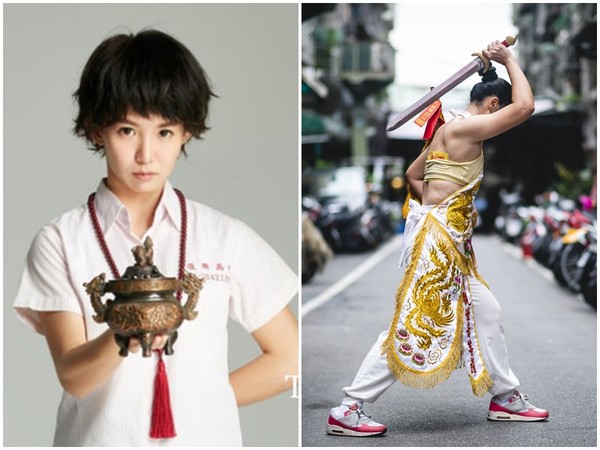
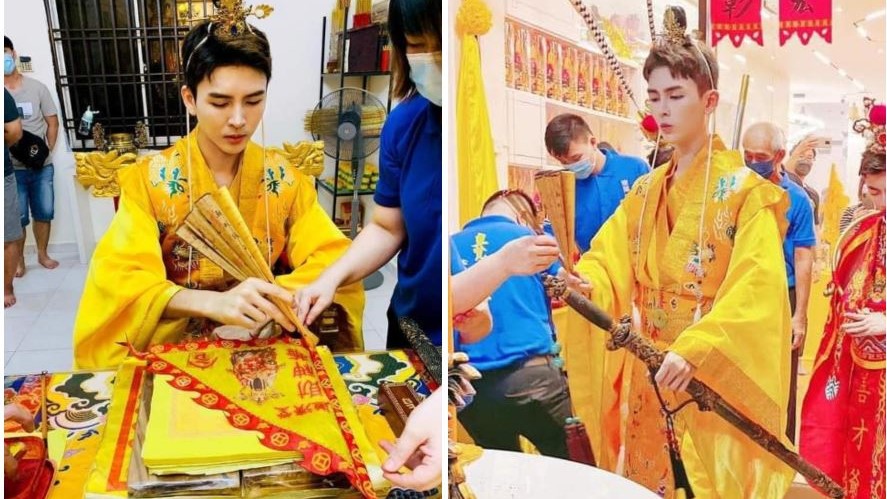
In Taiwanese folk religion, a “spirit medium” (*jitong*, 乩童) generally refers to a person who is believed to allow a deity to “descend” through them or communicate with worshippers through their body.
Terminology, rituals, and religious practices may vary between different regions and temples. In some places, terms such as “tongji” (童乩) or “jishen” (乩身) may also be used.
Within traditional religious beliefs, a spirit medium is not regarded as the deity itself, but rather as a medium between the divine and human worlds.
When worshippers encounter difficulties in life, physical discomfort, family problems, or other situations they feel unable to resolve, they may sometimes turn to temple rituals in search of divine guidance.
For this reason, the cultural context surrounding spirit mediums is often closely connected with temples, local communities, and folk religious traditions.
02|What Kind of Cultural Phenomenon Is “Spirit Possession”?
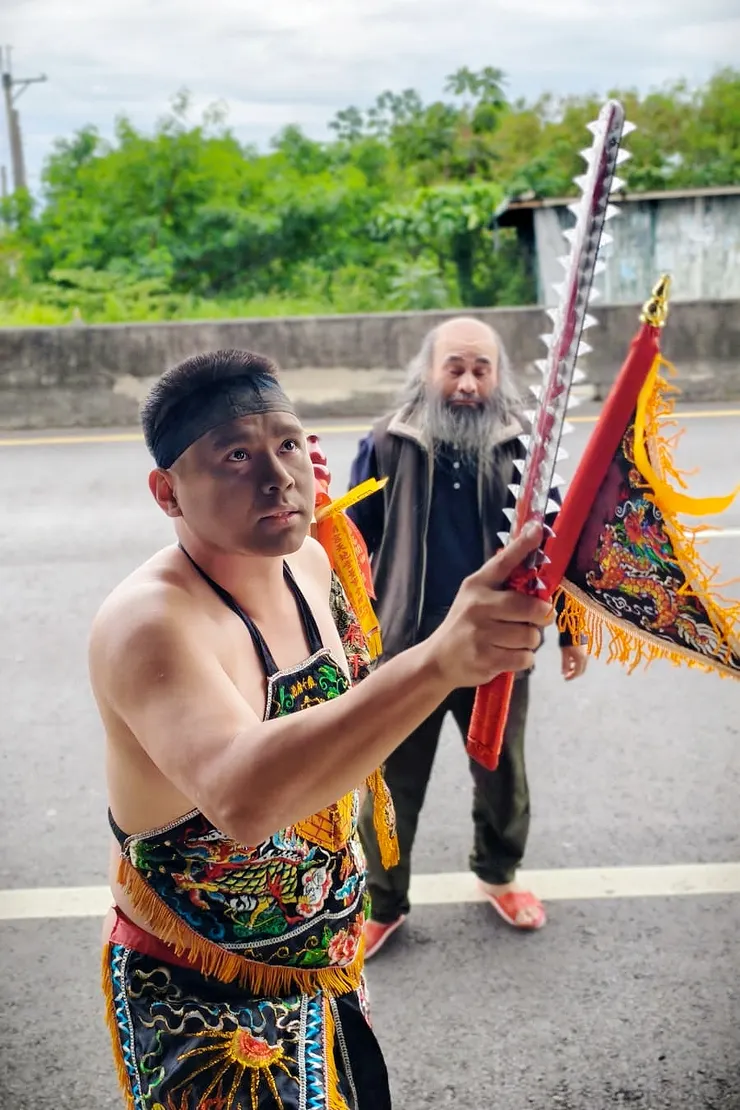
Within the context of folk religion, “spirit possession” generally refers to a state in which a spirit medium enters what worshippers understand as a condition in which a deity has descended upon them.
Such rituals may involve drums and music, incense, chanting, ritual implements, or specific religious procedures.
The forms of these rituals are not exactly the same in every temple.
Some rituals are solemn and ceremonial, while others are lively and festive. Some place greater emphasis on conveying divine messages, while others focus more on festivals, blessings, and community participation.
It is important to recognize that these phenomena can be understood in different ways.
For believers, they may represent genuine and sacred religious experiences; from academic and scientific perspectives, they can also be studied as religious rituals and cultural phenomena.
Respecting religious beliefs and maintaining a rational perspective can coexist.
03|Spirit Mediums and Temple Culture in Taiwan
To truly understand spirit mediums, we cannot look only at the word “mystery.”
Temples in Taiwan are often more than places of worship. They can also serve as important centers of local community life.
A temple may accompany a village or generations of residents, witnessing marriages, births, illnesses, deaths, festivals, and the history of the local community.
In some traditional temples, spirit mediums therefore hold distinctive social roles.
| Cultural Dimension | Possible Role of a Spirit Medium |
|---|---|
| 🛕 Religion | Participating in deity worship and religious rituals |
| 🙏 Faith | Serving as a medium through whom worshippers seek divine guidance |
| 🏮 Festivals | Participating in local temple festivals and traditional ceremonies |
| 🤝 Community | Connecting worshippers and local social networks |
| 📜 Heritage | Continuing the rituals and religious traditions of particular temples |
| 🌏 Culture | Representing an important cultural phenomenon within Taiwanese folk religion |
In this sense, a spirit medium is not simply “one person,” but someone who exists within an entire network of religious beliefs and social relationships.
04|Why Do Some People Become Spirit Mediums?
This is a question that is difficult to explain with a single answer.
Within traditional folk beliefs, some people may be regarded as having a special spiritual disposition or as having been chosen by a deity. Others may gradually become involved with temples and related religious traditions as they grow up.
Different temples and religious traditions have different explanations.
From the perspective of cultural studies, becoming a spirit medium may also be understood as a process in which personal life experiences and community beliefs become intertwined.
A person’s family background, local culture, religious environment, and individual experiences may all influence how they understand and interpret such experiences.
Therefore, when encountering the phenomenon of spirit mediums, rather than immediately trying to define it with a single explanation, it may be more meaningful to first understand the cultural context in which it exists.
05|Why Does the Image of the Spirit Medium Carry Such a Sense of Mystery?
Elements such as “a deity descending,” “divine messages,” “ritual implements,” and “ceremonies” naturally carry a strong sense of mystery.
Combined with the many stories passed down through folk traditions, spirit mediums have gradually become a particularly distinctive image within Taiwanese culture.
However, those who actually enter and participate in temple life may discover that religious practice is not necessarily filled with mystery.
In many cases, it is actually very much a part of everyday life.
Some people come to pray for peace and safety. Some pray for blessings for their families. Some participate in religious processions, while others simply come to light a stick of incense.
For many people, temples provide a space where they can settle their emotions, seek comfort, and connect with members of the local community.
Mystery may be what appears on the surface, but behind faith often lies one of humanity’s simplest wishes: the hope for peace, safety, and a better tomorrow.
06|Spirit Mediums, Divine Messages, and the Meaning of “Belief”
When worshippers seek answers through a spirit medium, it is important to understand the distinction between faith and real-world decision-making.
Religion can provide emotional and spiritual support and may offer people a sense of stability during difficult times.
However, when matters involve medical treatment, major financial decisions, legal issues, or personal safety, appropriate professional assistance should still be sought.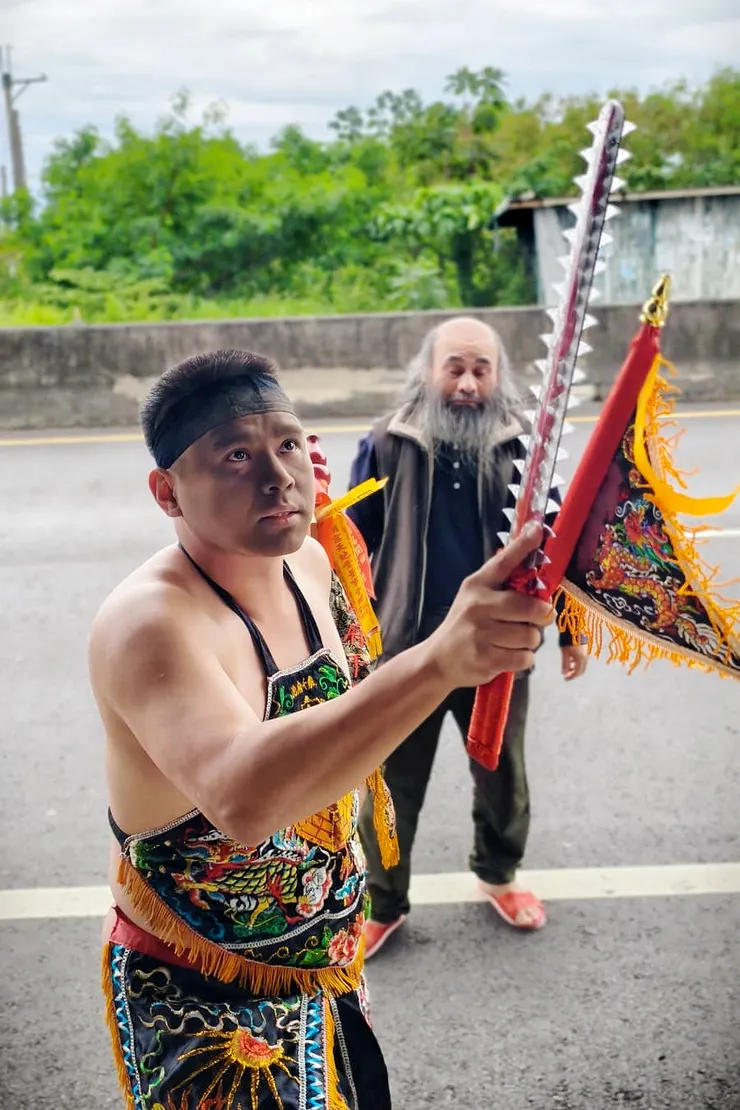
For example, when experiencing physical symptoms, one should seek medical evaluation; when facing legal issues, one should consult a qualified legal professional.
Faith can serve as a source of emotional and spiritual support, but it should not replace necessary professional judgment.
This does not mean rejecting faith. Rather, it reflects an attitude of responsibility toward life.
07|Seeing Another Side of Taiwanese Culture Through Spirit Mediums
Taiwan is an island with a rich diversity of religious traditions.
Buddhism, Taoism, folk religion, and various local festivals have interacted and blended throughout history, creating the remarkably diverse cultural landscape we see today.
Spirit mediums represent one aspect of this cultural landscape worthy of observation and understanding.
They remind us that human beings do not understand the world only through reason. We also make sense of life through rituals, stories, symbols, and faith.
When we enter an old temple and see incense drifting through the air, hear drums echoing, and watch people sincerely make their wishes and prayers, perhaps the most important question is not simply whether “a deity has truly descended.”
What may be more meaningful to consider is:
Why are people willing to believe? And what gives a belief the strength to continue across generations?
🏮 Common Elements of Spirit Medium Culture
| Element | Cultural Meaning |
|---|---|
| 🛕 Temples | Important spaces for faith, worship, and community activities |
| 🔥 Incense | An expression of respect, prayer, and connection with religious belief |
| 🥁 Drums and Music | Enhancing the ritual atmosphere and reflecting traditional cultural characteristics |
| 🪔 Deities | Important spiritual symbols within folk religion |
| 🙏 Worshippers | Participating in rituals and expressing wishes and prayers |
| 👤 Spirit Mediums | Serving, within certain religious traditions, as intermediaries between humans and deities |
| 🏮 Festivals | Bringing local communities together and continuing cultural traditions |
🌿 Understanding Spirit Mediums Through Three Perspectives
① The Perspective of Faith
Respect believers’ understanding of deities and rituals, while recognizing the meaning that religion holds within their spiritual lives.
② The Perspective of Culture
Understand spirit mediums within the broader context of Taiwanese history, local communities, and folk religious traditions.
③ The Perspective of Reason
Remain open-minded but avoid blindly accepting supernatural claims. In matters involving health, finances, and personal safety in particular, reliable professional information should still be relied upon.
Faith can have warmth, and reason can also be practiced with respect.
🕯️ Conclusion|Seeing the Most Human Wishes Between the Divine and Human Worlds
Spirit mediums are a mysterious yet deeply meaningful presence within Taiwanese folk religion.
Some people regard them as bridges between deities and human beings. Others see them as distinctive figures within religious rituals, while researchers may examine the phenomenon through the perspectives of psychology, anthropology, sociology, or other academic disciplines.
Different ways of understanding the phenomenon can coexist.
What is truly worth cherishing is that when we encounter different forms of faith, we can preserve both respect and thoughtful reflection.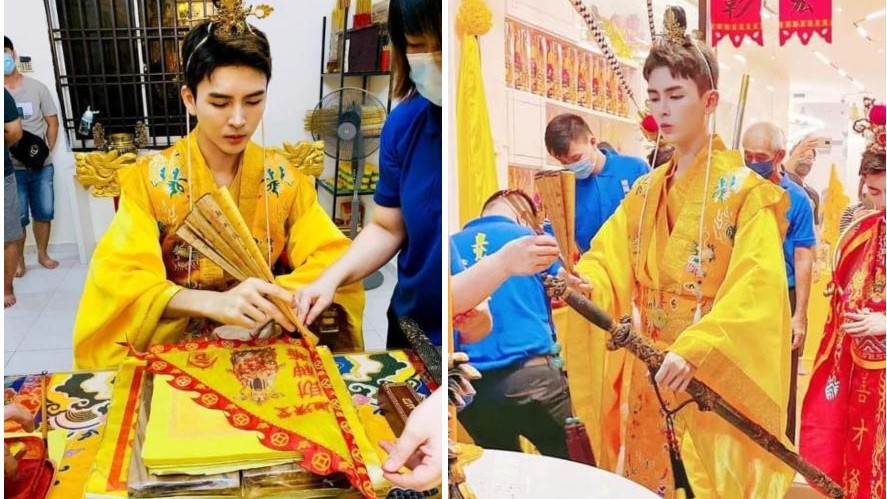
Because behind a stick of incense, the sound of a bell, a religious festival, and a sincere prayer, there is often one of humanity’s simplest wishes:
To hope that our families remain safe, that life goes smoothly, and that when we feel lost, we can find a sense of direction.
Perhaps this is where the deepest meaning of faith lies.
We may not be able to answer every unknown question, but in the uncertainty of life, we may still find a sense of inner peace.
Whether deities can truly be seen may be answered differently by each person; but the human longing for peace, hope, and happiness has always been real.
And spirit medium culture remains a distinctive presence left upon this land where faith and human relationships have become deeply intertwined.