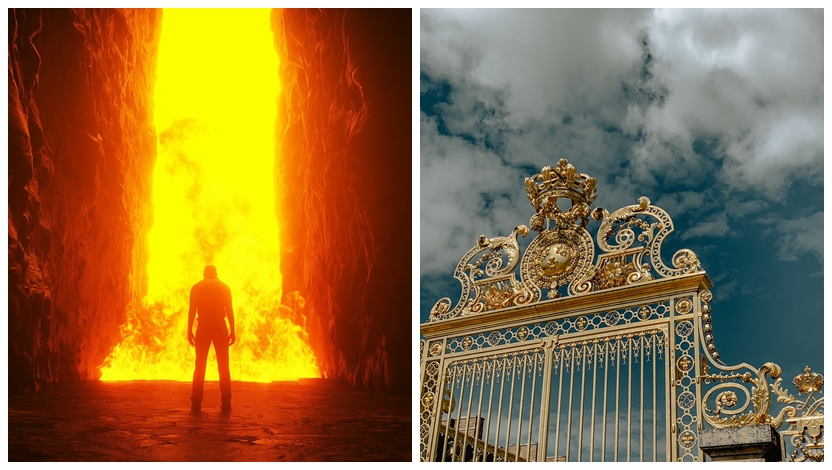
 Ken's Site
01|Heaven and Hell: Humanity’s Imagination of the Afterlife
Throughout history, humanity has continually reflected on a question that cannot be avoided:
Where do we go after death?
When life comes to an end, does consciousness disappear as well? Or is there another world waiting for the souls who leave this earthly life?
Different civilizations have offered very different answers to this question.
Some believe that heaven is a world filled with light, peace, and happiness, while others believe that hell is a place where souls face judgment and punishment. Some cultures also hold that the afterlife is not simply divided into heaven and hell, but involves reincarnation, an underworld, purification, or other forms of spiritual journey.
Therefore, “heaven” and “hell” are not universally identical concepts. Rather, they are spiritual symbols shaped by the long development of human culture, religion, and history.
02|Heaven: Humanity’s Imagination of Eternal Happiness
At the heart of the concept of heaven are often ideas of light, peace, love, and eternity.
In many religious traditions, heaven is portrayed as a place beyond suffering. The illness, loss, death, and hardships people experience in this world no longer have the same power there.
For those who have lost someone they love, “heaven” can also represent a gentle form of hope.
It allows people to believe:
Perhaps farewell is not truly the end of the story.
From a cultural perspective, heaven is not merely a description of another world. It also carries humanity’s imagination of what a beautiful life could be.
No war, no suffering, no loneliness; love, understanding, and eternal peace——these wishes also reflect people’s hopes for the world in which they live.
03|Hell: Beyond Fear, a Symbol of Morality
If heaven symbolizes hope, then hell often represents its opposite.
In many religions and cultures, hell is associated with judgment, sin, punishment, and suffering.
Yet if we look more closely, we may realize that hell is not merely a frightening story intended to scare people.
It also reflects an ancient social question:
If wrongdoing requires no consequences, can the world still be considered just?
As human societies developed, people began to think about good and evil, responsibility, and cause and effect. To some extent, the concept of hell became part of humanity’s imagination of whether “justice ultimately exists.”
Therefore, hell represents both fear and a warning.
It reminds people that their actions may hurt others and that they may also have to face the consequences of what they do.
04|Different Cultures, Different Visions of Heaven and Hell
There is no single version of heaven and hell.
| Cultural / Religious Tradition | Related Views of the Afterlife |
|---|---|
| ✝️ Christianity | Often understands the destiny after death through concepts such as heaven, hell, and divine judgment. |
| ☸️ Buddhism | Emphasizes reincarnation, karma, and different realms of existence; hell is not necessarily an eternal and unchanging destination. |
| 🪷 Indian Religious Traditions | Often involve ideas of reincarnation, karma, and different realms or states of existence. |
| 🏮 Chinese Folk Religion | Includes rich ideas surrounding the underworld, the realm of the dead, judgment, and reincarnation. |
| 🏺 Ancient Egyptian Culture | Placed great importance on the deceased entering the afterlife and undergoing judgment after death. |
| ⚱️ Ancient Greek Culture | Included myths concerning the underworld, the realm of the dead, and different regions within it. |
Although these stories are different, they share something in common:
Humanity has always tried to find meaning in death.
05|Heaven and Hell Can Also Be Metaphors for Life
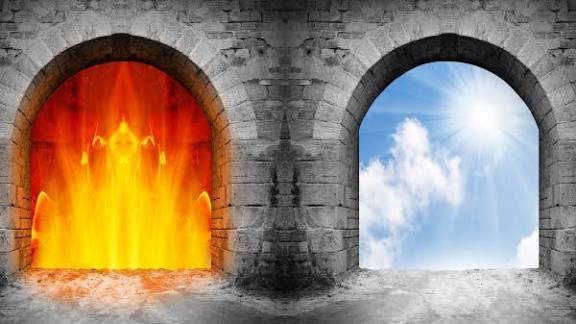
If we step slightly away from the religious stories surrounding heaven and hell, we may discover that they can also serve as metaphors for different states of life.
A person surrounded by love, at peace within, and able to make peace with themselves may experience a kind of heaven, even if life itself is far from perfect.
Conversely, someone who lives for a long time with hatred, fear, regret, and loneliness may feel as though they are living in hell, even while surrounded by luxury and comfort.
Perhaps, then, heaven and hell are not merely distant realms beyond this world.
Sometimes, they are also hidden within the choices we make every day.
A kind word can become someone else’s light; a cruel act can become a shadow that remains with someone for a very long time.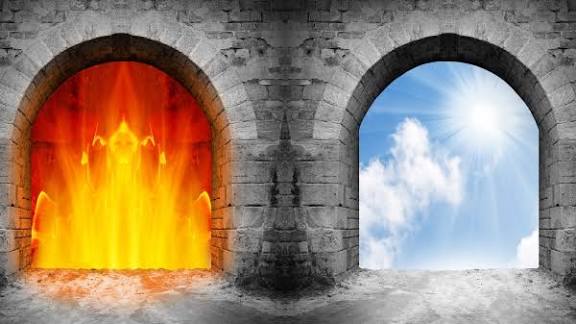
06|Why Do We Fear Hell and Long for Heaven?
Because human beings carry two profound desires at the same time:
We fear losing, yet we long for eternity.
We fear death because we do not know what lies beyond the end.
We imagine heaven because we hope that the people we cherish will not truly disappear, and that love can somehow transcend the limitations of life.
We fear hell because, perhaps deep within ourselves, we understand the importance of good and evil, responsibility, and consequences.
From psychological and philosophical perspectives, heaven and hell can both be seen as mirrors.
What they reflect may not be the actual appearance of the afterlife, but rather the deepest fears and desires of those who are still alive.
07|Perhaps What Truly Matters Is Not Where We Go After Death
No one can use scientific evidence to determine with certainty whether the heaven and hell described by different religions actually exist.
Different faiths offer different answers, and each person’s life experiences may also shape a different understanding.
Yet perhaps there is a question more important than “Where will we go after death?”
What kind of person do we want to become while we are still alive?
If we believe in heaven, can we offer a little more kindness to others today?
If we fear hell, are we willing to pause and think before making a choice that might hurt someone else?
Life is finite.
We cannot be certain what lies beyond this world, but we can decide how we treat the people around us in the present moment.
🌿 The Symbolic Meanings of Heaven and Hell
| Symbol | Heaven | Hell |
|---|---|---|
| Core Imagery | Light, hope | Darkness, fear |
| Emotions | Peace, love, happiness | Suffering, regret, loneliness |
| Moral Meaning | Goodness and redemption | Sin and judgment |
| Human Desires | Longing for eternity and happiness | Fear of punishment and loss |
| Life Lessons | Appreciation, forgiveness, hope | Reflection, responsibility, change |
| Philosophical Question | “Can something beautiful last forever?” | “Should we be responsible for the choices we make?” |
🕯️ Conclusion|Perhaps Heaven and Hell Both Begin with How We Choose to Live
Is heaven truly a place?
Does hell really exist somewhere at the other end of the world?
These questions may never have a single answer accepted by everyone.
Yet from ancient myths to modern civilization, humanity has never stopped contemplating death, nor have we stopped searching for the meaning of good and evil.
Perhaps heaven represents our deepest longing for love and happiness, while hell reminds us not to casually inflict pain and harm upon others.
We do not know where the journey of life ultimately leads, but we can decide what we leave behind along the way.
Perhaps true heaven does not necessarily lie somewhere in the distant sky.
It may be found in the smile of someone who feels understood, in the willingness to believe in love again after experiencing loss, or in knowing that, within our limited lives, we have sincerely treated another person with kindness.
And perhaps what we should truly fear is not hell after death.
It is losing the ability to love while we are still alive, without even realizing what we have lost.
So, before the answer is revealed——
Live well, love sincerely, learn to forgive, and become a little light in someone else’s life.
Perhaps this is the gentlest answer we can give to the mystery of “heaven and hell.”