 Ken's Site
📜 Announcement on the Life and Legacy of Master Xuanzang
Announcement Theme|Following the Path in Search of Truth——Honoring Master Xuanzang’s Spirit of Seeking the Dharma, Translating Scriptures, and Spreading Buddhist Teachings
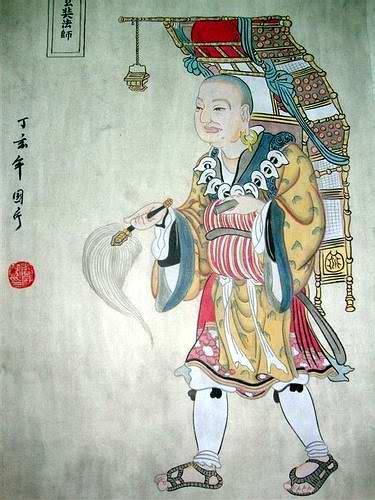
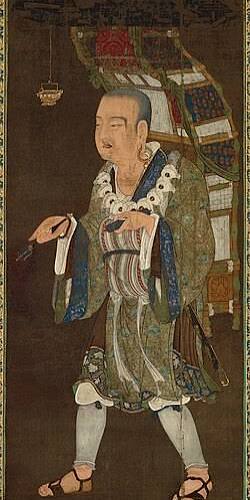
Master Xuanzang, whose secular surname was Chen, was born around 602 CE, the second year of the Renshou era of the Sui Dynasty, in Goushi, Luozhou (in the area of present-day Yanshi, Henan). He was a renowned Buddhist monk, Buddhist thinker, and translator of the Tang Dynasty. Later generations often respectfully referred to him as “Tang Sanzang,” or “Tripitaka Master of the Tang Dynasty.” One of the greatest missions of his life was to travel to India in search of the true teachings of Buddhism and bring a large number of Sanskrit Buddhist scriptures back to China for translation.
The reason his story has been passed down for more than a thousand years is not simply because of the great distance he traveled, but because it was a journey in which he devoted his life to the pursuit of truth.
01|Becoming a Monk in His Youth and Embarking on the Path of Buddhist Learning
From an early age, Xuanzang developed a deep interest in Buddhism and eventually entered the monastic life.
At the time, Buddhism was already widely practiced in China, but considerable differences existed among various scriptures, translations, and Buddhist schools. During his studies, Xuanzang discovered that many questions concerning Buddhist teachings could not be fully answered through the texts available to him. He therefore gradually developed an important aspiration:
If China lacked complete Buddhist scriptures, then he would personally travel to the land where Buddhism originated in search of them.
This idea became one of the major reasons that eventually led him to embark on his journey westward.
02|A Journey Across Thousands of Miles in Search of the Dharma
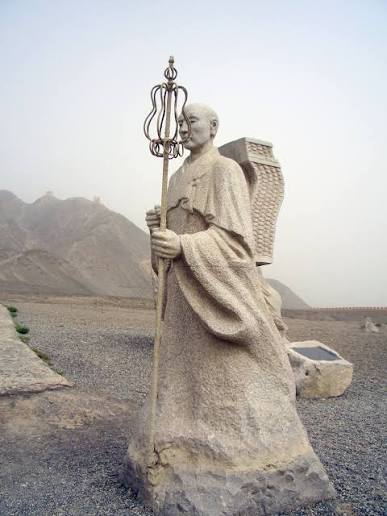
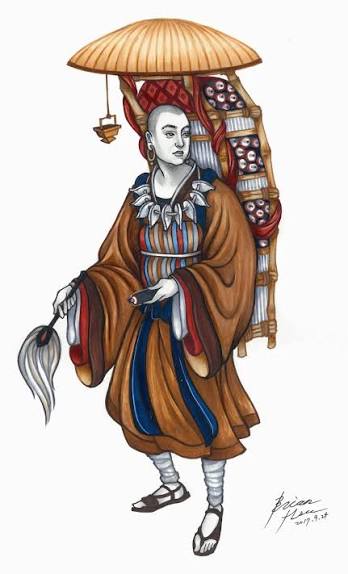
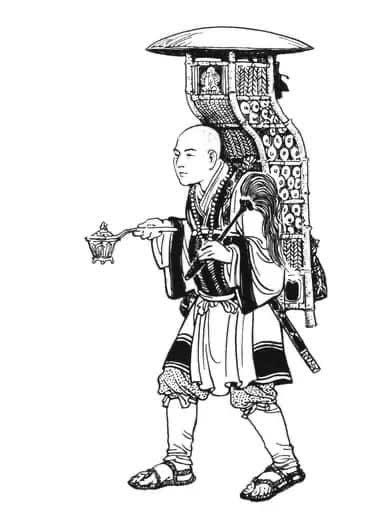
During the reign of Emperor Taizong of the Tang Dynasty, Xuanzang traveled westward to India in search of Buddhist teachings.
His journey was far from as easy or romantic as later literary works sometimes portrayed it.
Along the long road, he encountered deserts, mountains, extreme cold, shortages of water, as well as unfamiliar languages and cultures.
He crossed extremely harsh natural environments and faced situations that threatened his life.
Yet for Xuanzang, what truly mattered about the journey was not simply how far he had traveled, but his search for knowledge that was closer to the original sources of Buddhist teachings.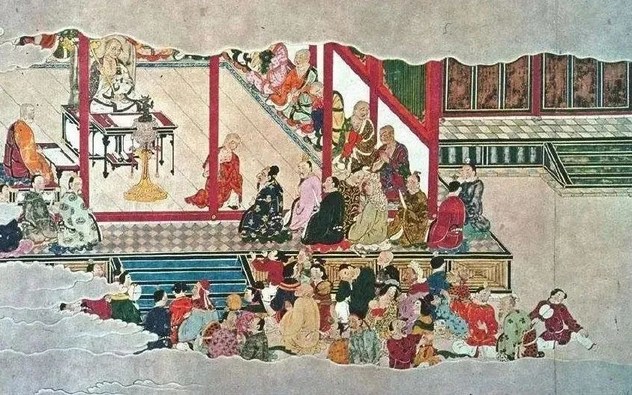
This determination made his journey westward one of the most representative journeys in search of the Dharma in the history of Chinese Buddhism.
03|Nalanda: Important Years of Buddhist Study
After arriving in India, Xuanzang studied at the renowned Buddhist center of learning known as Nalanda.
Nalanda was not merely a religious institution; it was also an important center of Buddhist scholarship and intellectual learning.
There, Xuanzang studied Buddhist scriptures and philosophical thought and learned from the renowned Buddhist master Śīlabhadra.
He conducted in-depth research into Indian Buddhist thought while also studying Sanskrit and encountering the diverse cultures of different regions of India.
This period transformed Xuanzang from simply a “seeker of scriptures” into a scholar with profound knowledge of Buddhism and strong linguistic abilities.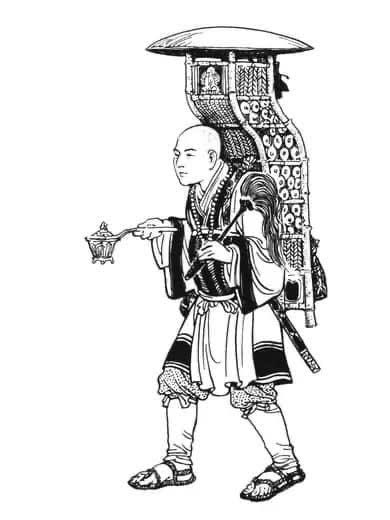
He connected Buddhist thought in China and India while laying an important foundation for his later translation work.
04|Bringing the Scriptures Home and Devoting a Lifetime to Translation
After completing his studies and travels in India, Xuanzang returned to China carrying a large collection of Buddhist scriptures.
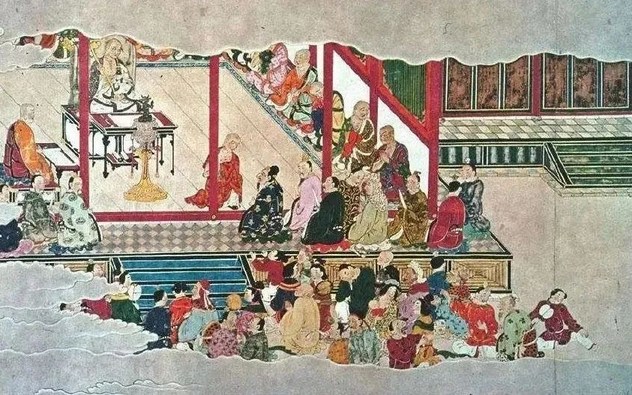
After his return, he received the attention and support of Emperor Taizong of the Tang Dynasty and others, and began undertaking large-scale translations of Buddhist scriptures.
The number of scriptures translated by Xuanzang was considerable, and his work had a profound influence on the development of Buddhist thought in China.
Among them were important scriptures such as the Heart Sutra and the Diamond Sutra, in translations attributed to Xuanzang.
His translation work was not simply a matter of converting words from one language into another. He placed great importance on accurately conveying the meaning of the original texts, maintaining linguistic precision, and preserving the integrity of Buddhist thought.
For this reason, Xuanzang holds an exceptionally important position in the history of Buddhist translation in China.
05|Yogācāra and Consciousness-Only Thought
Xuanzang was not only a translator, but also an important transmitter of Buddhist philosophical thought.
He brought important Indian Buddhist ideas to China, among which the teachings of the Yogācāra school and Consciousness-Only thought were particularly influential.
Consciousness-Only philosophy explores the relationship between human perception, consciousness, and our experience of the world, forming one of the most sophisticated systems of thought within Buddhist philosophy.
Xuanzang and his disciple Kuiji later helped develop these teachings in China, contributing to what later became known as the Faxiang School.
Therefore, Xuanzang’s contribution was not limited to “bringing Buddhist scriptures back.” More importantly, he introduced Indian Buddhist scholarship and philosophy into China, promoting intellectual and cultural exchange between the two regions.
06|The Great Tang Records on the Western Regions: A Precious Historical Record
Another important achievement of Xuanzang’s journey was the preservation of valuable historical and cultural records.
He recounted his observations and experiences in the Western Regions and India, which were compiled by his disciple Bianji into The Great Tang Records on the Western Regions.
The work records the geography, cities, customs, religions, and social conditions of Central Asia, India, and other regions during that period.
For this reason, The Great Tang Records on the Western Regions is not only an important source for the study of Buddhist history, but also a valuable document for understanding the history of ancient Central Asia and India.
From this perspective, Xuanzang’s journey was also a cultural exploration.
He recorded the world he personally witnessed, allowing people many centuries later to understand civilizations in distant lands as they existed more than a thousand years ago.
✦ Major Milestones in the Life of Master Xuanzang
| Period / Stage | Major Events | Historical Significance |
|---|---|---|
| 🌱 Early Years | Encountered Buddhism and entered the monastic life | Embarked on the path of Buddhist practice and learning |
| 📖 Years of Study | Studied Buddhist scriptures extensively | Discovered differences among translations and philosophical teachings |
| 🐫 Journey Westward | Traveled to India in search of Buddhist teachings | Demonstrated a determined spirit of learning and inquiry |
| 🪷 Nalanda | Studied Buddhism and learned from Śīlabhadra | Gained an in-depth understanding of Indian Buddhist thought |
| 🏛️ Return to China | Brought back a large collection of Buddhist scriptures | Promoted cultural and intellectual exchange between China and India |
| 📜 Translation of Scriptures | Undertook large-scale Buddhist scripture translations | Had a profound influence on Chinese Buddhism |
| 🌏 The Great Tang Records on the Western Regions | Recorded observations of the Western Regions and India | Preserved important historical and cultural information |
| 🕯️ Later Years | Continued translating scriptures and spreading Buddhist teachings | Devoted his life to Buddhism, scholarship, and cultural exchange |
07|Why Does the Spirit of Xuanzang Still Matter Today?
Perhaps the most admirable aspect of Xuanzang’s life was not simply the fact that he traveled thousands of miles to the west.
What truly deserves our reflection is the spirit of intellectual curiosity he demonstrated when facing the unknown.
When the answers available to him were insufficient, he did not choose to stop questioning.
When the road became difficult, he did not easily give up.
And after obtaining the scriptures, he did not keep his knowledge to himself. Instead, he devoted himself to translation and transmission, allowing more people to encounter these precious ideas.
Therefore, the “spirit of Xuanzang” can be understood as a respect for knowledge, a pursuit of truth, and a willingness to give back to society through what one has learned.
🌙 Conclusion|A True Journey Is Undertaken So That More People Can See the Light
The life of Master Xuanzang was both a journey across geographical boundaries and an exploration deep into the world of ideas.
He set out from China and traveled toward distant India; he searched for answers within Buddhist scriptures and then brought what he had learned back to his homeland.
What he left behind was not only Buddhist scriptures, nor merely the words recorded in The Great Tang Records on the Western Regions.
More importantly, he showed later generations that:
A person’s true journey is not merely about reaching a particular destination, but about seeking the answers they genuinely believe are worth pursuing.
More than a thousand years later, we may no longer need to cross deserts and mountains in search of knowledge, but each of us still has our own “journey westward” to undertake.
It may be a dream, a field of study, a career, or a question about life that we have always wanted to understand.
The road may be long, and the answers may not appear immediately.
Yet the story of Xuanzang reminds us——
As long as we remain curious, have the courage to seek knowledge, and stay true to our convictions, even if we move slowly, we can still walk step by step toward a broader world.
May we all preserve the courage to seek knowledge that Master Xuanzang embodied, remaining unafraid of distant horizons and the unknown as we journey through life, and always keeping a heart willing to explore the truth.