 Ken's Site
01|The Pain Hidden Behind the Screen
The internet was originally meant to be a place where people could communicate, share, and connect.
We share our lives on social media, exchange ideas in comment sections, and stay connected with people far away through messages.
However, when a screen creates distance between us, it can also make us forget that the person on the other side is not simply an account, but a real human being.
A mocking comment, a maliciously edited photograph, private content shared without consent, or even repeated negative comments can all become forms of cyberbullying.
What makes these forms of harm especially painful is that they often make no sound.
The person who has been hurt may continue going to school, going to work, eating meals, and even smiling on social media as usual.
Yet those words may still leave deep scars in their heart.
02|“It Was Just a Joke” Is Not an Excuse for Harm
One of the most common problems surrounding cyberbullying is that the person causing the harm believes they were “just joking.”
The person who sends a message may spend only a few seconds writing it.
But the person who receives it may need a very long time to recover from the emotions it causes.
Everyone has different boundaries.
What may seem like a joke to one person can feel humiliating to another.
Therefore, deciding whether something is truly a joke cannot depend solely on whether the speaker intended to cause harm. We must also consider whether the person receiving it feels respected.
True, mature humor should never be built upon another person’s loss of dignity.
If laughter comes at the expense of someone’s embarrassment, then it is no longer a joke worthy of applause.
03|Words Have No Facial Expressions, Yet They Can Leave Emotional Scars
When we speak face-to-face, we can sense another person’s emotions through their expressions, tone of voice, and eyes.
But in the online world, a short sentence can lose the warmth and context it might have carried in person.
A sentence such as “You’re really pathetic” might be intended as a joke, but it could also become the reason someone lies awake all night.
A mocking emoji may be nothing more than a quick tap for the sender, yet to the recipient, it can feel like a form of rejection.
What is more, content posted online can easily be screenshotted, shared, and saved.
A moment of cruelty can therefore be amplified into long-lasting pressure.
That is also what makes cyberbullying so frightening.
It does not necessarily stop when school ends, when work is over, or when someone returns home.
As long as the phone is still there, the hurt can appear before their eyes again.
04|Bystanders Can Also Become Part of the Change
Cyberbullying does not involve only “the bully” and “the victim.”
There are also many silent bystanders.
Some people see malicious comments but choose to scroll past them; some see someone being mocked but remain silent because they are afraid of becoming the next target; others join in by liking or sharing the content, allowing the original harm to reach even more people.
However, being a bystander does not mean that we are powerless.
Not sharing, not agreeing, and not joining in the attack are all choices we can make.
If the situation allows, we can also offer a calm reminder or privately check in on the person who is being hurt.
Sometimes, a simple “Are you okay?” can let someone who feels completely alone know that——
At least someone is willing to stand by their side.
05|Do Not Mistake Silence for Courage
People who experience cyberbullying are often told, “Just ignore it.”
But things are not always that simple.
When someone’s photographs, name, or private information are maliciously spread online, simply turning off the phone does not necessarily make the problem disappear.
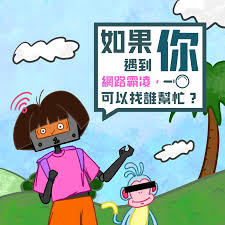
Therefore, when facing cyberbullying, saving relevant records, blocking or reporting accounts, and seeking help from someone you trust are all possible steps to take.
Especially when the situation involves threats, the exposure of personal information, persistent harassment, or other circumstances that may cause real-world harm, no one should have to face it alone.
Asking for help is not a sign of weakness.
Being willing to say, “I need help,” is actually an act of courage and a way of protecting yourself.
06|Before You Hit Send, Take One Second to Think About Someone Else
Every day, we may write countless words.
A comment, an emoji, or a short opinion may quickly fade from our own memory.
But for another person, those words may not disappear so easily.
So, before pressing “Send,” we can ask ourselves one simple question:
If these words were being said to me, how would I feel?
If the answer is, “I might feel hurt,” then perhaps it is worth thinking twice.
Freedom on the internet does not mean that we have the right to hurt others without boundaries.
True freedom should be built upon respect.
We can disagree, debate, and offer criticism, while still choosing not to humiliate, attack, or trample on another person’s dignity.
07|Let the Internet Become a Place That Connects Us Again
The internet itself is neither good nor evil.
What truly determines the atmosphere of the online world is every person who uses it.
We can fill comment sections with hostility, or we can add more understanding. When someone falls, we can laugh at them, or we can choose to reach out a hand.
Perhaps we cannot prevent every instance of cyberbullying, but we can at least decide what kind of person we want to be.
Do not be the first person to hurt someone.
And do not be the person who allows that harm to spread further.
When we choose more empathy and less ridicule, more understanding and less public shaming, the internet can gradually return to the kind of place it was meant to be.
Conclusion|There Is a Heart on the Other Side of the Screen
A single sentence can feel light, yet it can also carry tremendous weight.
We can never know how long the words we casually leave behind will remain in another person’s life.
So, whenever we use the internet, may we remember that there is a real person behind the screen.
They can feel sad. They can feel afraid. They may even lose confidence because of a single sentence.
May we preserve our freedom to speak, while also preserving the kindness to think about others.
Because a truly meaningful online world is not one without different voices. It is one where, even when our opinions differ, we are still willing to respect one another.
And perhaps true maturity is knowing that we could hurt someone, but choosing not to.