 Ken's Site
🪷 Bodhidharma|The Chan Master Who Came from India to China
01|Who Was Bodhidharma?
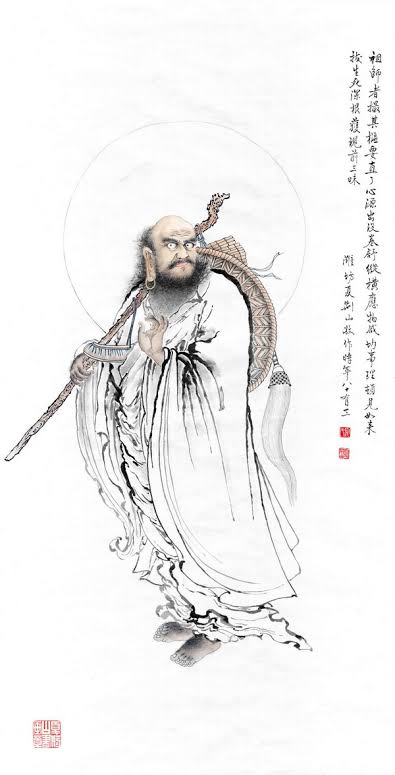
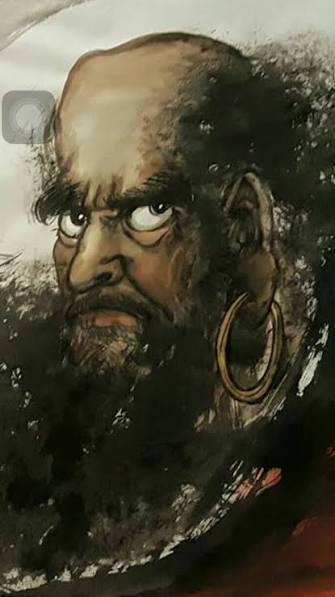
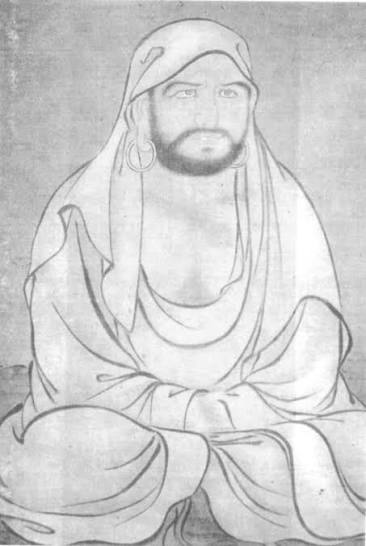
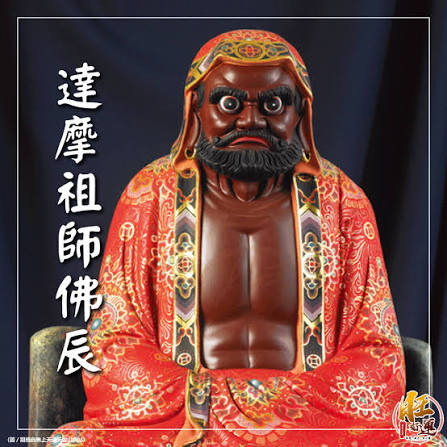
Bodhidharma, commonly known as Bodhidharma (菩提達摩), is a highly important figure in the tradition of Chinese Chan Buddhism.
Historical sources do not provide a completely consistent account of his life, and many legendary stories were added by later generations. Therefore, when discussing Bodhidharma, it is important to distinguish, to some extent, between historical records and later traditions.
Traditionally, Bodhidharma is believed to have come from India and arrived in China sometime during the Northern and Southern Dynasties, bringing with him ideas of Buddhist meditation and practice.
His central spirit can be summarized in one direction:
Do not seek the Buddha Dharma only through words and outward forms; return to your own mind and directly observe and experience it.
This eventually became one of the most important characteristics of Chinese Chan thought.
02|What Is “Chan” Really Seeking?
When many people think of Chan, they may imagine meditation, temples, wooden fish, and the sound of bells.
But Chan is not simply a posture of sitting on a meditation cushion.
Chan places greater emphasis on observing our own thoughts and directly experiencing the true state of life.
Every day, countless thoughts arise within us.
When we are happy, we want to hold on to that happiness; when we are sad, we want to escape from the pain as quickly as possible. When we receive praise, we feel delighted; when we are criticized, we may easily become angry.
What Chan is concerned with is whether we can see these thoughts without forever allowing them to lead us wherever they wish.
Therefore, Chan is not about eliminating emotions from life. Rather, it allows us to begin asking:
“What am I thinking right now?”
“Why am I having this thought?”
“If I do not immediately follow it, can I see another possibility?”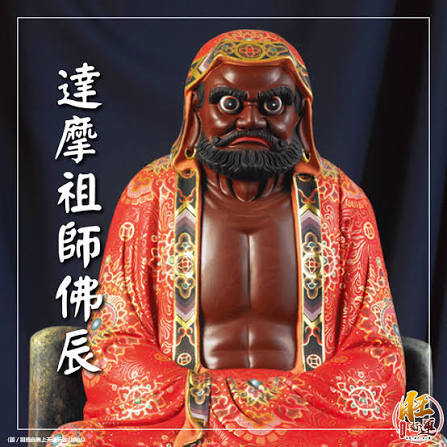
This is a profound form of self-awareness.
03|Bodhidharma and Emperor Wu of Liang: Beyond Merit, What Else Is There?
One of the most famous stories about Bodhidharma is his encounter with Emperor Wu of Liang.
Emperor Wu was a strong supporter of Buddhism. He built temples, supported monks, and sponsored the copying of Buddhist scriptures. He therefore asked Bodhidharma how much merit he had accumulated through these actions.
Bodhidharma’s response left a profound symbolic meaning in the stories of Chan Buddhism.
The message is not that doing good deeds has no meaning. Rather, it reminds us that:
If a person focuses only on external merit and rewards without truly understanding their own mind, then whether genuine spiritual practice has taken place is still something worth reflecting upon.
This story also reveals an important spirit of Chan Buddhism——
Practice cannot remain merely on the level of outward form.
Giving, reciting scriptures, building temples, and performing good deeds are certainly meaningful. But if the mind remains filled with attachment, pride, and discrimination, there is still a need to continue looking inward.
04|Crossing the Yangtze River on a Single Reed: Bodhidharma Between History and Legend
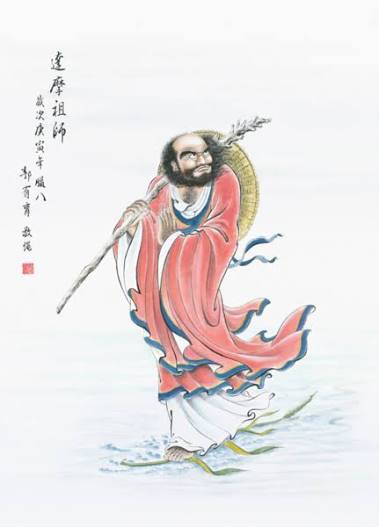
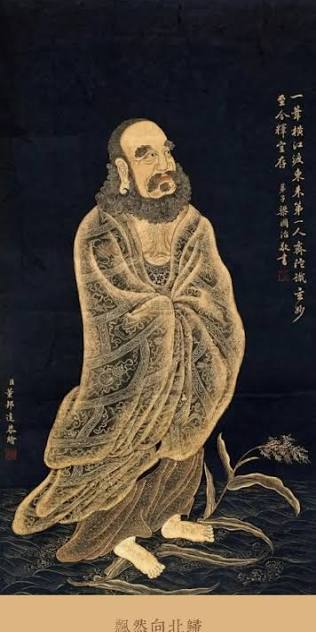
“Crossing the Yangtze River on a Single Reed” is one of the best-known legends associated with Bodhidharma.
According to tradition, after arriving in China, Bodhidharma crossed the Yangtze River, and later generations portrayed this miraculous scene as “crossing the river on a single reed.”
Whether this story can be regarded as historical fact should be distinguished from religious legend.
Yet the reason such stories endure is often because they carry a deeper symbolic meaning.
A single reed may appear fragile, yet it becomes a means of crossing the river.
It seems to tell us:
True strength does not necessarily come from something outwardly powerful; it may instead arise from inner freedom.
For this reason, the story of crossing the river on a single reed eventually became more than a miraculous tale. It also became a highly representative image within Chinese Chan culture.
05|Nine Years Facing a Wall: Becoming Quiet and Seeing One’s Own Mind
Another legend closely associated with Bodhidharma is that of “facing a wall for nine years.”
According to tradition, Bodhidharma spent many years practicing meditation while facing a wall in a cave near Shaolin Temple, giving rise to the story of “Bodhidharma facing the wall.”
“Facing a wall” may seem like an extremely simple thing to do.
There is no travel, no noise, and no elaborate ritual——only the act of facing a wall for a long period of time.
Yet what is truly difficult may not be facing a wall, but facing our own mind.
When the sounds of the outside world gradually become quiet, we may discover that the inside of our mind is actually filled with tremendous noise.
Memories, fears, desires, anger, regrets, and expectations emerge one after another.
Therefore, “facing the wall” can be understood as a symbol:
Only when we are willing to become quiet do we have the opportunity to truly see ourselves.
06|Bodhidharma and Shaolin Martial Arts: A Legend That Is Easily Confused
In modern culture, Bodhidharma is often associated with Shaolin Temple, martial arts, and even the Yijin Jing, or Muscle-Tendon Change Classic.
However, this part requires particular caution.
Later generations certainly developed many folk stories claiming that Bodhidharma taught martial arts, but from a historical perspective, it is not appropriate to simply attribute the entire origin of Shaolin martial arts to Bodhidharma.
In other words:
Bodhidharma is an important patriarch of Chinese Chan Buddhism and has a deep legendary connection with Shaolin culture, but the claim that “Bodhidharma founded Shaolin martial arts” cannot be regarded as an undisputed historical fact.
Distinguishing history from legend can actually help us understand Bodhidharma more completely.
His most significant influence ultimately lies in Chan thought and the traditions of spiritual practice.
07|The Chan Spirit Left Behind by Bodhidharma
Bodhidharma’s story has been passed down for more than a thousand years. What may truly deserve our reflection is not the miraculous legends themselves, but the spirit revealed behind those stories.
He reminds us not to keep looking outward for answers.
We can read scriptures, listen to Buddhist teachings, and seek guidance from teachers, but ultimately, what we must truly face is our own mind.
| The Spirit of Bodhidharma | Chan Interpretation | Lessons for Modern Life |
|---|---|---|
| 🪷 Looking Within | Understanding our own thoughts | Following emotions less blindly |
| 🧘 Facing the Wall in Meditation | Learning stillness and awareness | Giving ourselves genuine time to rest |
| 🌊 Crossing the River on a Single Reed | A symbol of transcending external limitations | Remaining flexible when facing difficulties |
| 🔥 Persevering in Practice | Not giving up easily in the face of difficulties | Long-term accumulation matters more than temporary enthusiasm |
| 🌿 Letting Go of Attachment | Not allowing gain and loss to bind us | Accepting the uncertainty of life |
| 👁️ Pointing Directly to the Mind | Gaining insight through personal experience | Not merely knowing, but putting understanding into practice |
✦ Bodhidharma’s Chan Philosophy|From “Seeking Outward” to “Looking Within”
People today receive an enormous amount of information every day.
We can find answers online, gain knowledge from books, and look to the experiences of others for direction.
Yet the more information we have, the more confused our minds can sometimes become.
We may know many principles, but that does not necessarily mean we truly live by them.
We know we should let go, yet we still cannot.
We know we should cherish what we have, yet often understand its value only after losing it.
We know there is no need to compare ourselves with others, yet we still cannot help envying them.
The Chan spirit symbolized by Bodhidharma reminds us:
True wisdom is not simply knowing more; it is being able to truly see our own mind.
🌙 Conclusion|True Chan Is Not Somewhere Far Away, but Within a Single Thought
The image of Bodhidharma, passed down through countless generations, has long transcended that of a purely historical figure.
He exists within the history of Buddhism as well as within the legends of Chan; he exists in temple culture as well as in the countless ways people imagine and understand “Chan.”
Crossing the river on a single reed is a legend.
Facing the wall for nine years is a symbol.
And behind these stories, what truly deserves to remain is that quiet yet unwavering spirit.
When we stop rushing to seek answers from other people and begin observing our own minds; when we stop chasing external success and begin understanding our own attachments; when we are willing to leave a little space for stillness within a noisy world——
perhaps, in that very moment, we begin to approach Chan.
Chan does not necessarily exist in the mountains, nor does it necessarily exist inside a temple.
A cup of tea, a quiet road, a deep breath, or even a single moment in which we are willing to stop and see ourselves can become the beginning of practice.
What Bodhidharma left behind may not have been a miraculous method, but a simple yet profound reminder:
Looking outward allows us to see the world; looking inward allows us to gradually see ourselves.
When the mind becomes quiet, the world no longer seems quite so noisy.