 Ken's Site
01|An Educational Vision That Began on a Mountain
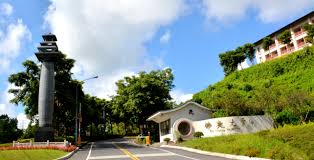
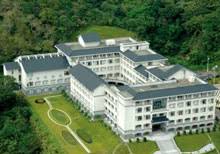
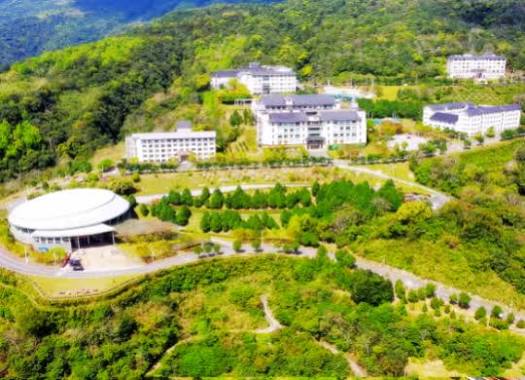
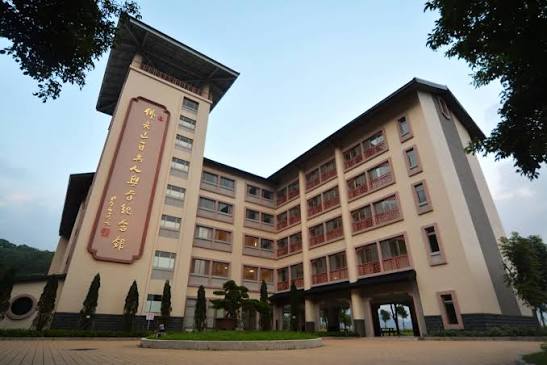
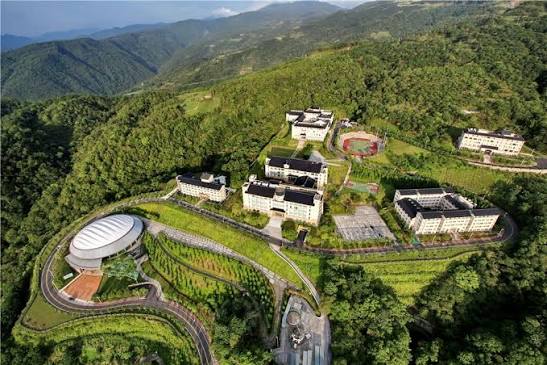
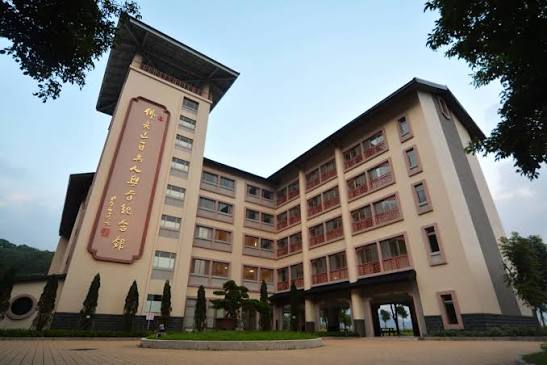
Fo Guang University is located on Linmei Mountain in Jiaoxi Township, Yilan County. The campus sits at an elevation of approximately 430 meters, overlooking the Lanyang Plain and Turtle Island. Compared with universities located in urban areas, Fo Guang University offers the tranquility of the mountains and forests, creating a distinctive atmosphere that has become one of the university’s defining characteristics.
Founded by Master Hsing Yun, Fo Guang University began planning in 1993. After seven years of development, it officially began admitting students in 2000 as the “Fo Guang Institute of Humanities and Social Sciences.” Undergraduate programs began enrolling students in 2002, and in 2006, the institution was officially renamed “Fo Guang University.”
The evolution of its name also reflects the university’s gradual development.
Beginning with the humanities and social sciences, it gradually expanded into different fields while seeking to preserve, within the framework of modern higher education, the traditional academy spirit that values interaction between teachers and students, character development, and the pursuit of knowledge.
02|“Righteousness, Integrity, the Way, and Compassion” — The Spirit of the University in Four Words
One of the most representative expressions of Fo Guang University’s educational philosophy is its motto: “Righteousness, Integrity, the Way, and Compassion.”
These four words were articulated by Master Hsing Yun and became an important foundation of the university’s educational philosophy.
“Righteousness” emphasizes that knowledge is not merely something to memorize, but something to transform into the ability to think and make sound judgments. “Integrity” means distinguishing right from wrong while understanding how to do things properly. “The Way” represents the pursuit of knowledge, truth, and scholarship. “Compassion” emphasizes gratitude, care, and service to society.
Together, these four words form a complete educational journey:
First learn how to think, then learn how to judge; from pursuing knowledge to learning how to care for others.
Therefore, university education is not only about cultivating someone who “knows how to get things done.” It also seeks to nurture people who can think independently, take responsibility, and are willing to contribute to society.
03|The Spirit of the Traditional Academy Makes University More Than a Place for Classes
One of Fo Guang University’s important characteristics is its “modern practice of the traditional academy spirit.”
Traditional academies were not simply places for studying. They were also spaces where teachers and students lived, discussed scholarship, and cultivated their character together.
Fo Guang University has sought to incorporate this spirit into modern university education and has gradually developed an academy-based approach to higher education. According to the university’s official information, its educational direction has evolved from the “modern practice of the academy spirit” toward the “innovative practice of the humanistic spirit.”
This philosophy means that “university” is no longer simply a place for earning a degree.
It becomes more like a journey of personal growth.
Students learn their professional disciplines here, but they also learn how to interact with others; they learn knowledge, but also how to put that knowledge into practice.
04|Small-Class Teaching Brings Teachers and Students Closer
Since its founding, Fo Guang University has placed considerable emphasis on small-class teaching and interaction between teachers and students.
According to official information, when the university began admitting undergraduate students in 2002, it adopted a small-class system, with most departments enrolling approximately 30 to 40 students. The aim was to create a learning environment characterized by closer interaction, greater support, and more opportunities for exchange between teachers and students.
For students, the meaning of a small-class system is not simply that “there are fewer people.”
More importantly, teachers have more opportunities to get to know their students.
Students also find it easier to ask questions, participate in discussions, and even develop long-term learning relationships with their professors.
At a university that emphasizes humanistic values and the spirit of the traditional academy, the “human being” becomes an essential part of education itself.
05|A Mountain Campus, Another Kind of University Landscape
If urban universities represent energy and convenience, Fo Guang University’s mountain environment offers an entirely different atmosphere for learning.
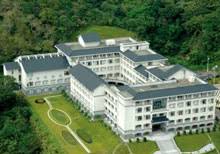
In the morning, students can see the mountain scenery, and on clear days, they can look across the Lanyang Plain toward Turtle Island.
The changing seasons also become part of campus life.
In such an environment, “studying” seems to be about more than simply sitting in a classroom and completing courses.
Walking through campus, looking at the sky, mountains, forests, and distant horizons can also become a form of life education.
Sometimes, the best lessons are not simply what a teacher says in the classroom, but the moment when we begin to learn how to observe ourselves and the world around us.
06|Beginning with the Humanities and Moving Toward Diverse Learning
Fo Guang University is not limited to Buddhist-related education.
Today, the university offers a diverse range of professional fields through different colleges and departments, covering areas such as the humanities, social sciences and management, creative technology, wellness industries, and Buddhist studies. According to current official information, the university has five colleges and fifteen departments, with doctoral programs offered by some departments.
This also reflects an important characteristic of Fo Guang University:
Although it was founded by a Buddhist organization, university education is not simply equivalent to religious education.
For example, the official introduction of the Department of Public Administration and International Affairs emphasizes universal values found within Buddhist teachings, as well as public concern and social responsibility, rather than positioning the university primarily around religious propagation.
This approach allows “humanistic values” to serve as a common foundation for dialogue among different professional disciplines.
07|Looking Toward the World, Allowing a University in the Mountains to See Beyond Its Horizons
Although Fo Guang University is nestled in the mountains of Yilan, its educational vision extends far beyond the campus.
Fo Guang University is part of the Fo Guang Shan educational system and forms an international network with Nan Hua University in Taiwan, Hsi Lai University in the United States, Nan Tien Institute in Australia, and Guang Ming College in the Philippines. The university also encourages students to participate in overseas volunteer programs, exchanges, and study-abroad opportunities while promoting international academic collaboration.
This creates an intriguing contrast:
The campus is in the mountains, but the horizons can reach the world.
On one hand, the university preserves its connection to the land and its humanistic roots. On the other, through exchange and learning, it enables students to understand different cultures and societies.
In this sense, “internationalization” is not simply about going abroad. It is about developing the ability to understand the world.
✦ The Educational Characteristics of Fo Guang University|Six Dimensions of Its Educational Spirit
| Core Characteristic | Underlying Spirit | Educational Meaning |
|---|---|---|
| 🪷 Humanistic Spirit | Valuing human dignity and care for life | Nurturing not only professional skills, but also character |
| 📖 Academy Spirit | Emphasizing interaction and shared learning between teachers and students | Making education more closely connected to students |
| 🌿 Mountain Campus | Combining the natural environment with humanistic learning | Cultivating reflection and thoughtfulness in a peaceful setting |
| 🌏 Global Perspective | Promoting international exchange and learning | Developing cross-cultural understanding |
| 🤍 Social Responsibility | Emphasizing service and civic responsibility | Bringing knowledge back into society |
| 🎓 Professional Learning | Developing diverse colleges and academic departments | Building practical professional capabilities |
08|What Kind of People Does Fo Guang University Hope to Nurture?
If the educational philosophy of Fo Guang University could be described in one sentence, perhaps it would be:
“First become a complete human being, then become a professional.”
Professional ability is certainly important.
But someone who can truly make a positive impact on society needs to know not only how to work, but also how to collaborate with others; not only how to pursue personal achievement, but also how to understand the relationship between the self and society.
Therefore, beginning with “Righteousness, Integrity, the Way, and Compassion,” Fo Guang University places knowledge, character, care, and social responsibility on the same educational path.
The university’s recent educational philosophy also includes “whole-person and lifelong education,” “a warm and friendly campus,” and “autonomous and self-aware learning,” while continuing to promote innovative practices rooted in the humanistic spirit.
🌙 Conclusion|Between Mountains and Sea, Reading a Book About Life
What a university truly leaves behind is often more than its buildings, courses, and degrees.
It may be a sentence once spoken by a teacher.
It may be a memory of working together with classmates.
Or perhaps, one day, while standing on a hillside and looking across the Lanyang Plain toward Turtle Island, we suddenly understand what kind of person we want to become.
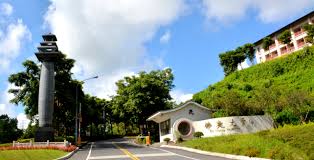
Fo Guang University began on Linmei Mountain and has followed its educational journey for more than two decades.
With “Righteousness, Integrity, the Way, and Compassion” at the heart of its philosophy, and with humanistic values and the academy spirit as important educational directions, it continues to explore another possibility for modern university education between the mountains and the sea.
Perhaps the true meaning of university has never been simply about earning a diploma.
It is about having a period of youth in which we can learn, reflect, make mistakes, explore, and rediscover who we are.
At Fo Guang University, the mountains are the backdrop, books are the path, and people have always remained at the heart of education.
May everyone who enters this campus leave not only with knowledge, but also with a more mature, gentler, and stronger heart, ready to step into the next chapter of life.
Because good education does not merely teach us how to move toward the world; more importantly, after traveling far, it helps us remember where we came from and what kind of person we hope to become.